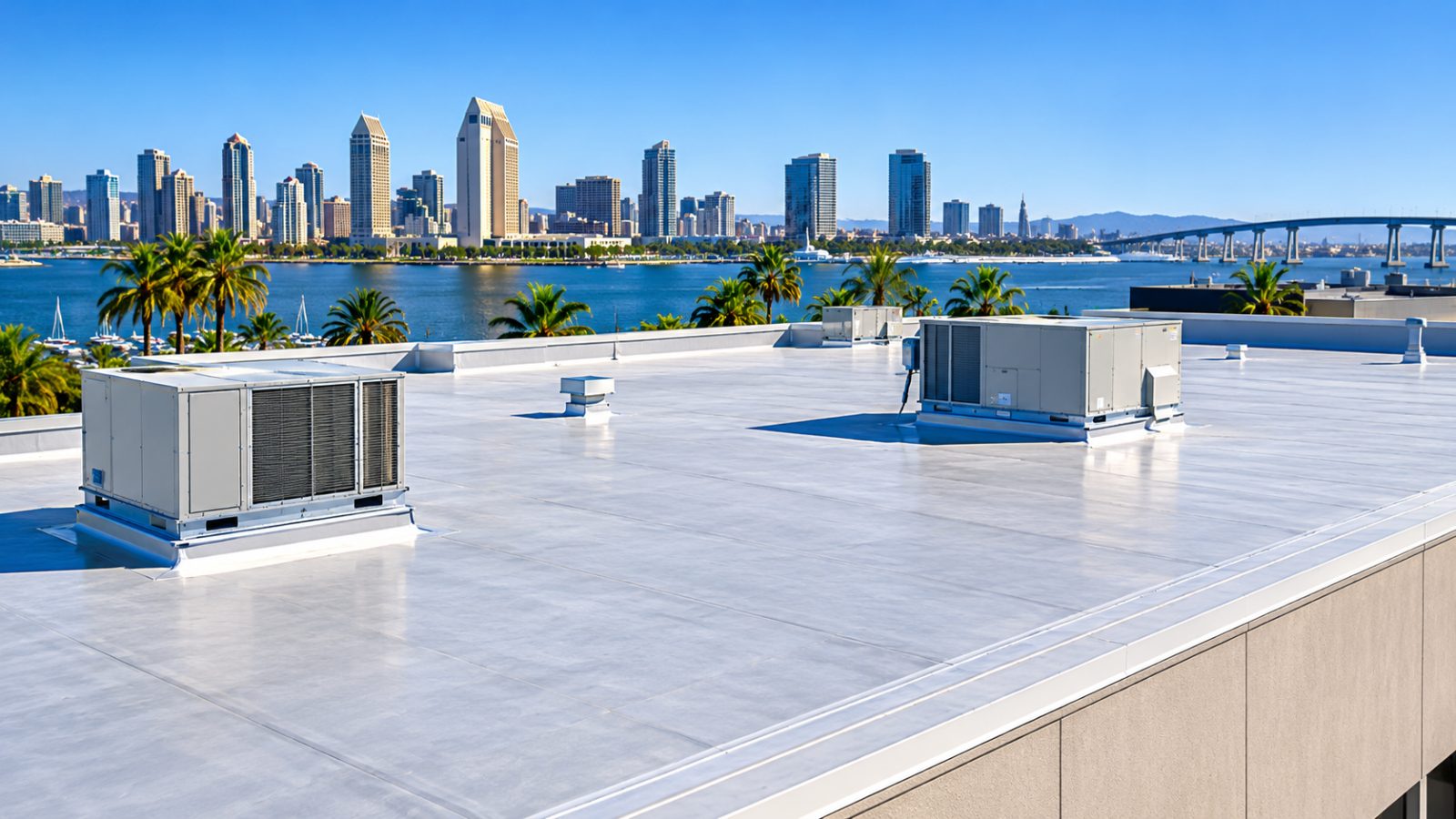
Single-Ply Commercial Roofing
TPO & EPDM Roofing Systems in San Diego
Compare commercial membrane options for your property. Connect with an independent roofing professional.
We connect you with independent commercial roofing professionals. We do not perform roofing work. How referrals work.
TPO and EPDM Roofing for Commercial Buildings
TPO and EPDM are two widely used single-ply membrane options for low-slope commercial roofs. Both can form part of a durable roofing assembly when properly specified, installed, and maintained, but they differ in material composition, seam methods, surface characteristics, and detailing requirements.
San Diego Commercial Roofing Services helps property owners understand these differences before selecting a roofing system. The right choice depends on the building, roof layout, existing conditions, local requirements, and long-term maintenance expectations.
Explore Commercial Roofing Across San Diego County

Choosing Between TPO and EPDM
A roofing membrane is only one part of a complete commercial roof. Insulation, cover boards, attachment methods, drainage, flashing, and the underlying deck all affect performance. In San Diego, roof reflectivity and energy-code requirements may be important considerations, particularly for certain low-slope roof projects. Material selection should be evaluated against the applicable requirements and the specific building design.
TPO Roofing Systems
Thermoplastic polyolefin, commonly called TPO, is a single-ply membrane frequently used on commercial low-slope roofs. Many TPO products are available with reflective surfaces, and their seams are typically joined using heat-welding methods. System performance depends on the specified product, installation quality, attachment, and detailing.
EPDM Roofing Systems
Ethylene propylene diene monomer, or EPDM, is a synthetic rubber roofing membrane with a long history of commercial use. EPDM systems use compatible seam and flashing methods specified by the manufacturer. Color, attachment method, roof configuration, and energy requirements should be considered when evaluating an EPDM assembly.
Reflectivity and Energy Considerations
Reflective roof surfaces may help reduce solar heat absorption, but building energy performance depends on the entire assembly and operating conditions. California energy standards can affect allowable roofing specifications. Reflectivity should be considered alongside insulation, durability, drainage, and applicable code requirements.
Seams and Flashing Details
TPO and EPDM use different methods for forming seams and integrating roof details. Penetrations, parapets, drains, and equipment curbs require compatible materials and approved installation procedures. The quality of these details is essential to keeping water out of the building.
Maintenance and Repair Planning
Both membrane types benefit from periodic inspections, clean drainage paths, controlled roof access, and prompt attention to damage. Repair materials and techniques must be compatible with the existing membrane. A maintenance plan should follow the manufacturer's guidance and reflect the building's rooftop activity.
TPO and EPDM Roofing Cost Considerations
| Service | Estimated Cost | Average |
|---|---|---|
| TPO roof system | Project-specific quote | Varies by assembly and area |
| EPDM roof system | Project-specific quote | Varies by assembly and area |
| Insulation and cover board | Project-specific quote | Varies by specifications |
| Membrane flashing details | Project-specific quote | Varies by roof complexity |
No universal price advantage is assumed for either system. Costs depend on specifications, market conditions, roof access, materials, and existing conditions.

Your property. Your next step.
Start with a conversation about your roof.
Share your San Diego County property details and request a quote from an independent roofing professional.
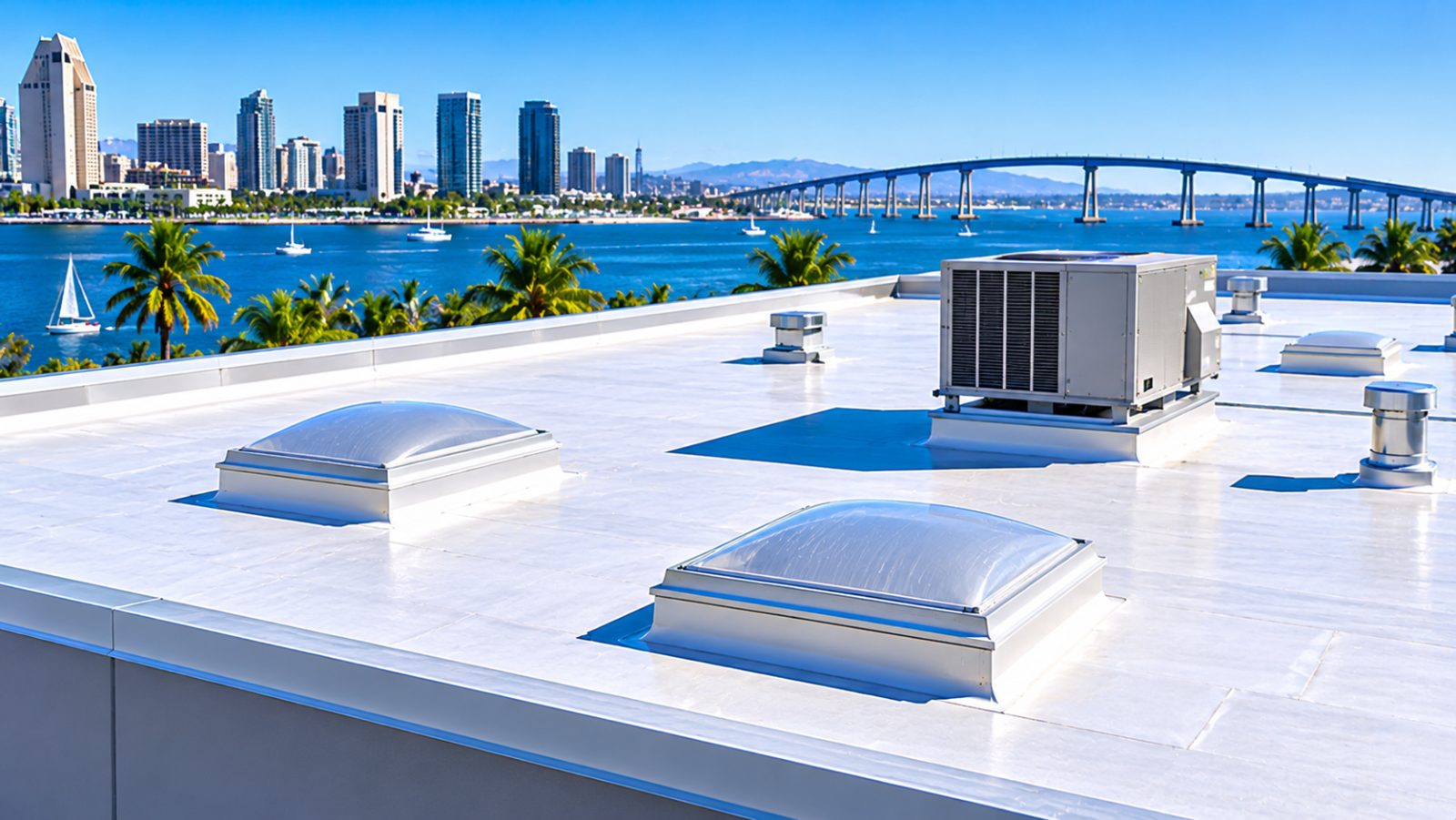
Selecting a Single-Ply Roofing System
Review the Building
Identify roof dimensions, use, drainage, equipment, and existing conditions.
Discuss Performance Priorities
Consider energy requirements, maintenance expectations, and roof traffic.
Compare Suitable Assemblies
Review compatible membrane, insulation, and attachment options.
Define Roof Details
Address penetrations, drainage, transitions, and flashing requirements.
Plan Installation and Care
Clarify installation considerations, documentation, and maintenance guidance.